“Anti-normalization is the first key step to long-term eroding of Trump’s support.”- Jerry Nadler
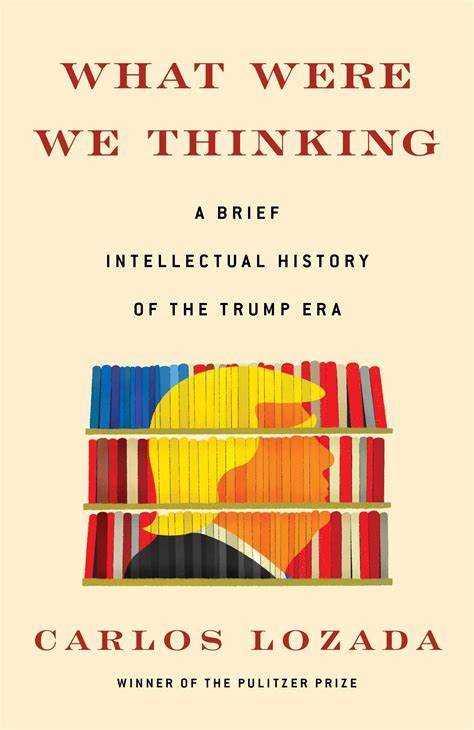
In his chapter on the resistance literature, Lozada focuses on a specific resistance, that is to Trump. The Resistance is led by the politicians, commentators, and writers who from Trump’s inauguration made it their mission to resist Trump and his agenda. Various reporters declared they could not cover this presidency as they had covered previous administrations. Fact checkers went into hyperdrive, and activists waved signs displaying anti-Trump slogans. This is only one side of the resistance in relation to Trump, with his ascendancy and support driven by a different resistance, much like the Brexit movement and other populist revolts. He is an outsider who ran on populist messaging, like “Drain the swamp!”, “Fake news!”, and “Typical politicians!”. These messages resonate with voters who share a mistrust of institutions and are disenfranchised. Many of the key states Trump won, like Pennsylvania and Michigan, were gutted by deindustrialization and are crippled by hopelessness. Trump visited these areas and tapped into this despair, mobilizing a resistance against the Washington establishment that outsourced jobs and left the rust belts and their people suffering.
There is also a resistance on the left, led by Bernie Sanders, a populist candidate losing the Democratic nomination to Hilary Clinton, which was revealed in emails published by Wikileaks in 2016 to be sabotaged by the DNC. (2016). Sanders’ base did not turn out in large numbers for Clinton. There were also writers on the left, like Chris Hedges and David Sirota, who saw Clinton as a symbol of neoliberalism and corporatism. This is a resistance on the left within the Democratic party that did not support Clinton and resisted what they see as failed messaging and policies of the Obama administration. There is also a significant population who do not even vote. The Knight Foundation released a report, the 100 Million Project, referring to the 100 million people who did not vote in the 2016 presidential election, in 2020 which presented the results of a mass survey of nonvoters. Among the top reasons for not voting were a lack of confidence in the electoral system and feeling that all elections are rigged is noted consistently (2020). This may not be an active form of resistance, but it is an act of passive defiance that resists the current political system.
The resistance to Trump is often performative and lacks nuance, epitomized in the number of celebrities who publicly cursed Trump, from Eminem to Robert De Niro. This section in Lozada’s book could be broadened by exploring different types of resistance in relation to Trump including resistance to the man, resistance to the Democratic party establishment, the entire party establishment, and bureaucratic institutions like the State Department or the CIA. Lozada’s failure to provide nuance in this section results in a look at a selection of performative texts responding to the 2016 election and Trump’s presidency. A few interesting texts that, though still biased, offer a refreshing touch of nuance compared to the others, focus on a major part of the anti-Trump resistance. This is the group of texts that lament the death of democracy in America, January 20th, 2017, embodied in Lozada’s own Washington Post emblazing the epitaph under their title, “Democracy Dies in Darkness”. While some of these democracy grievance texts are direct responses to Trump, many are responses to the populist revolts that have occurred across the globe, such as Brexit and the election of Boris Johnson. There are also several works that lament the death of truth and journalism and are all key parts of the resistance canon, and Lozada’s is sorely lacking,
Lozada focuses on the faux resistance, which vomits virtue signaling hashtags like #resistance, #NotNormal, #Not my president. This resistance is led by the Democratic party establishment, Nancy Pelosi, Chuck Schumer, Jerry Nadler, and other prominent Democrats who vowed to oppose Trump’s agenda and to resist his “attacks on our sacred democracy”. The plight of the activist left, the Never Trump conservatives, and activist journalists is a faux resistance because it is an establishment, in both the Republican and Democratic parties, opposing a threat to their carefully managed status quo that set the stage for Trump’s rise. The activists and celebrities who waved signs and chanted “F*** Trump!” played the part of being a resistance but were reacting to a resistance movement in lock step with the status quo. Lozada does not explore the variety of resistances in America, although he notes that the election of Trump increased political engagement, especially among young people. Lozada writes, “It is painful solace that the nation’s elected president would prove so abhorrent and dangerous that he propels the citizenry toward greater civic participation, a sort of democracy by desperation.” (2021) Evidently, Lozada misunderstands the desperation surrounding Trump, whether it is in opposition to or support for him. The exasperation of blue checkmarks on Twitter and activist journalists who have a voice and use it is not the same as the desperation felt by many of the voiceless who voted for Trump, and by the mass of entirely disenfranchised citizens who did not or could not vote. That is another element of desperation that Lozada is blind to in his bias. Many of the non-voters, as noted in the Knight Foundation’s report, feel their vote does not matter and the electoral system is rigged against them (2020). Trump being on the ballot in 2016 did not motivate them to vote, and it is unlikely that Trump winning gave them anymore motivation, or that it awakened some sense of empowerment that is long defeated. Lozada underestimates the depth of hopelessness and dismay of many Americans and how resistance manifests in many forms such as a vote for Trump out of a real feeling of having nothing more to lose hence it’s worth the risk. Some may feel that putting Trump in the white house and right inside what they see as an elite bubble may remind them that they exist. It may be a vote for Trump because whatever. Taibbi notes this “F it” vote after speaking to people at Trump rallies, where many participants declared they were voting for Trump because “F it” (2021). This is a significant act of not only resistance, but defeat, kicking the man, the act of a dislocated citizenry casting a ballot for a candidate who will upend a system that in their minds ignores their existence. Lozada fails to tap into the multiple resistances that led to Trump’s election, and which contribute to his continuing popularity.
At the start of this chapter, Lozada notes that the Resistance typically focuses on opposing Trump’s more problematic policies, and that “it is less engaged in battling or even comprehending the forces that propelled Trump to the presidency in the first place.” (2021). Evidently Lozada himself is not engaged in understanding the forces that drove Trump into the presidency. He offers no look at deindustrialization, loss of trust in legacy media, how the Democratic party betrayed the working class, how despair is worsening highlighted by the Opiod crisis. Lozada’s chapter here thus feels superficial and the title, Resistible, a misnomer. What he claims is an examination of resistance literature covers only a surface level resistance, one that manifests in angry tweets or news show rants, not the many resistances that are ongoing even as Trump has left office. Allegedly, normality has returned once again to America following Joe Biden’s inauguration. However, as Heath Ledger’s Joker says in The Dark Knight, “There’s no going back to the way things were.” Trump has changed things, or has he? The outrage that put him in power once may do so again. Even if he chooses not to run again, someone will seize the opportunity generated by him in 2016 and throughout his presidency. Lozada misses out on an opportunity to provide nuance in a topic relating to Trump that requires it if we are to learn from the Trump era. He instead glosses over whiny monologues and pompous texts calling for conversation and understanding in such a polarized era. Lozada undermines his critique that the Resistance canon fails to understand the issues that led to Trump’s rise throughout this chapter and the whole book. He focuses on Trump and the period of his presidency as if it’s an aberration, a unique era, and this is a dangerous assumption to make. He epitomizes this assumption when he writes, “whether “we” is still a viable concept in the Trump era or will remain so after it.” (2021). Framing these questions and debates in this way, in the period of Trump’s presidency, presumes beforehand America was swell, and that after Trump we can sigh in relief and begin to rebuild. The cracks in the system that allowed Trump to rise can be papered over through such fantastical notions and methods of framing the ‘Trump era’, these cracks will soon become fissures.
In closing this chapter, Lozada notes that should Trump not be reelected, he fears that “four years of resistance may not have prepared us for the task of making “one nation after Trump” a reality greater than a book cover.” (2021). This notion of making one nation after Trump is a prime example of Lozada’s bias, as he is implying that the Trump era is an aberration that must be recovered from, and it is Trump that divided the nation. All the underlying problems that allowed for his rise are perpetuated by the same corroded system. Lozada’s focus on the faux Resistance and on resistance as an act taken against Trump is detrimental to his larger goal of trying to understand how we got here. He refers to four years of resistance, meaning the Resistance to Trump and his administration, when there has been a variety of growing resistances across the political spectrum. Despite the craziness that followed Trump’s loss in the 2020 election and his continued ridiculous behavior, the results of the election show an incredible success for the Trump administration. Even after charges of being a white supremacist, anti-immigration, bigoted, and so on, half the country still voted for Trump. Votes for Joe Biden were not necessarily in support of him, and some of these voters may be disillusioned enough by 2024 that should Trump be on the ballot again, he may win their vote.
Next week I will argue that Lozada’s “Chaos Chronicles” category and analysis is a misinterpretation of the more sensationalist literature in the Trump canon. I will explore how much of the intrigue ridden books that were published during and after Trump’s presidency, whether by reporters or White House employees, are more thriller novel than stalwart journalism. This is not to totally discount the credentials of investigative reports like Robert Costa, Bob Woodward, Michael Wolff, it is simply some thoughts on why these book series were written on Trump’s presidency. This a topic will be explored in even more detail when I offer my reflections and analyses of these drama books. Lozada’s observations are a good starting point for staking my own position on this section of the literature. The key question I seek to answer in the next post is: Does Lozada blame Michael Wolff, instead of the mass of journalists who sidelined objectivity to cover Trump’s presidency, due to a blind spot rooted in his biases, as a writer for the Washington Post, an outlet that routinely maligned Trump?
References
Foundation, K. (2020, February 18). The 100 Million Project. Knight Foundation. Retrieved February 19, 2022, from https://knightfoundation.org/reports/the-100-million-project/
Lozada, C. (2021). What Were We Thinking: A Brief Intellectual History of the Trump Era. Simon & Schuster.
Taibbi, M. (2021). Hate Inc.: Why Today’s Media Makes Us Despise One Another: With a New Post-Election Preface. OR Books.
Wikileaks . (n.d.). Search the DNC email database- Bernie Sanders . WikiLeaks. Retrieved February 19, 2022, from https://wikileaks.org/dnc-emails/?q=Bernie%2BSanders&mfrom=&mto=&title=¬itle=&date_from=&date_to=&nofrom=¬o=&count=50&sort=0
 Not Without Incident: Questioning Big Brother's Platitudes
Leave a comment