Carlos Lozada
On Russian Lit
“Well, that’s because he would rather have a puppet as president of the United States.”[1]– Hillary Clinton
“This is what they exploited. They played the game as if they were immensely impressed by his personality and believed this is the guy who should be the president of the United States one day: it is people like him who could change the world. They fed him these so-called active measures soundbites and it happened. So it was a big achievement for the KGB active measures at the time.”[2]– Yuri Shvets
“The silence by news organizations that for years perpetuated this fraud is ominous. It cements into place a new media model, one without credibility or accountability.”[3]– Chris Hedges
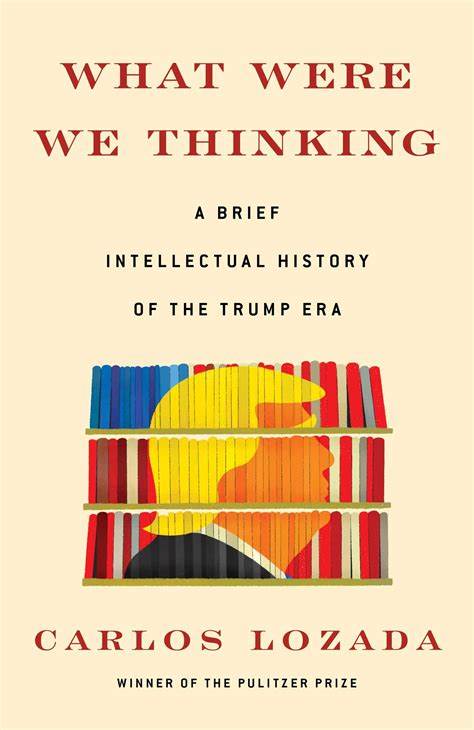
A major theme of the Trump presidency was the extent and impact of his alleged intimate ties with Russia’s Vladimir Putin. Endless speculation and gossip spread through the coverage of his administration and communication with Russia was made impossible and criminal. Consider the fate of Michael Flynn, Trump’s first pick for National Security Advisor, and how he was prosecuted for communicating with his Russian counterpart to be, as they spoke before the Trump administration took office.[4] It is evident that much of the tensions between the US and Russia are worsened by the residual impact of Russiagate. The seemingly endless Ukraine crisis, what is now essentially a proxy war between the West and Russia, is a prime example how the lack of communication or understanding between the US and Russia renders peace inconsiderable and war inevitable. Lozada dedicates an entire chapter in his book to Trump’s alleged ties to Russia. Just like he does in the rest of his analysis; he does not challenge any of the books he analyzes. For example, Luke Harding’s book on collusion, which is complete bunk, is presented as a serious account of collusion and how Trump was compromised by Putin. The fallout from Russiagate continues, but the signs were always there, as much of the reporting during Trump’s campaign and his tenure were based on unnamed experts, rumor, hearsay, and stories that were pure fiction. Since it hindered Trump’s presidency, it didn’t matter whether it was true or not.
Lozada is astute enough to note that many of the books on Russian collusion were in the moment and were quickly overtaken by the next book, however, in this observation he never wonders whether the goal of authors like Harding was uncovering the truth, or it was simply making millions of dollars and getting television appearances. The latter is far more likely. It is understandable that Lozada does not make this connection, as his own outlet, The Washington Post, together with the New York Times won a Pulitzer Prize for reporting on the Russia investigation. Lozada himself was a member of the jury that decided the award.[5] Thus, it is understandable, but not defensible, that he approaches Trump’s ties to Russia as if it is a serious investigation and was a strike at American democracy. Where Lozada writes that “Even now—after all the books, after Trump’s debasement before Vladimir Putin in Helsinki, after the Mueller report and its misinterpretations, after the “perfect” Ukraine phone call, after the impeachment investigation and trial—Russia still seeks to sway the coming election, U.S. intelligence officials have warned, and Trump still dismisses it all as a hoax. We don’t yet know how, or when, this ends.’[6], he refers to several Russiagate tropes, like that Trump debased himself before Putin in their Helsinki meeting. This is like the absurd body language analysis that was used to suggest Trump’s admiration of and deference to Putin.[7]
Importantly, Lozada notes that there is the Mueller report and its ‘misinterpretations’[8] What does he mean by this? The primary reason for the Mueller investigation was the charge that Trump colluded with Russia to get himself elected. This was not proven. The strongest case in the report is that Trump obstructed justice. A lot of commentary emphasized this during the investigation and when the report was released, and much of the commentary, especially from people who pushed Russiagate, was some iteration of how Mueller did not disprove their conspiricism, he instead either bolstered it by raising even more questions or was a further indictment of Trump and his acolytes, whether it’s for obstructing justice or having secret ties with Russia that were not picked up by Mueller and his crack team of investigators, who were given unlimited resources and subpoena power.
David Frum captures the sentiment among Russiagaters that Mueller’s report raised questions instead of conclusively answering them when he writes in an article for The Atlantic that “And so, after all of Mueller’s hard work, the American people remain as unsure as ever about their president’s fundamental loyalty to this country. Mueller has joined with Trump to shove deeper into the shadows any answer to the most haunting question of the Trump era: What does the president owe, and to whom does he owe it”[9] If that is the most haunting question of the Trump era, then I have some magic beans to sell Frum. The only people seriously asking whether Trump is loyal to the US or Russia are lunatics with their eyes glued to MSNBC and CNN awaiting the nail in the coffin for Trump, the smoking gun that proves beyond reasonable doubt that he colluded with Russia in 2016. Consider the article by Jim Risen for The Intercept on whether Trump is a traitor.[10] On the contrary, there have been multiple revelations that show the criminality and corruption in the security state and corporate media which kept Russiagate going despite it being known as complete hokum. This is not to defend Trump at all, however, if he is a traitor as the Russiagate theory implies, then this is an incredibly serious charge and thus requires serious evidence. We have yet to see such evidence, despite all the cries from clowns like Adam Schiff and Jamie Raskin. It is already clear that the looming Durham report will be ignored by outlets like The New York Times and CNN.
The Russiagate narrative only serves Trump and the right, and the way Lozada approaches this narrative is simplistic and biased. There are many books he did not include in his review, which should have been analyzed to provide a more balanced picture of Russiagate. Notable examples are Andrew C McCarthy’s Ball of Collusion, Matt Taibbi’s Hate Inc., and Stephen F. Cohen’s War with Russia?[11] Excluding such literature is a detriment to Lozada’s stated goal to be balanced in his approach to the Trump era. Lozada refers to the role of literature and journalism covering the Trump presidency as educational where he writes that “In the face of a deadlocked Congress and a Republican Senate majority that has abdicated its oversight of the executive branch, the investigations of the Trump era, and the journalism and literature on Trump and Russia, are standing in, however partially and imperfectly, for such an education today.”[12] Yes, they are, but Lozada is focusing on journalism and literature that supports his contention that Trump has close ties to Russia and that him and Putin were best friends. He is seemingly uninterested in any point of view that dissents from this simplistic narrative and is actively stuck in his own media silo. Even if he analyzed dissenting views to critique them and argue why he thinks those dissenters are wrong would have made for more lively and engaging discussion. Here Lozada is navel gazing, reading the books of colleagues and people he admires rather than going outside his comfort zone and challenging his views on Russiagate. He does not even mention Russiagate, only Russian collusion or ties. Lozada would do well to broaden his reading list.
This chapter reads as a typical anti-Trump piece of writing. The long-term consequences of Russiagate, the inability to communicate diplomatically with Russia during a time of crisis and war, and the pervasive Russophobia strangling Western politics and society, are outright ignored in favor of finger pointing and bold accusations of treason, which Trump is rightly and roundly critiqued for. One of the books that Lozada analyzes for this chapter is The New Yorker’s Masha Gessen’s The Future Is History: How Totalitarianism Reclaimed Russia. Lozada notes in his conclusion that “Gessen wrote The Future Is History to tell “the story of freedom that was not embraced and democracy that was not desired” in the author’s native Russia. If freedoms eroded and democracy squandered prove to be the story of our nation and our time, let it be recorded with similar discernment, should it be written at all.”[13] Lozada is falling for a conspiracy theory and an application of Neo-McCarthyism that erodes freedoms and democracy. Apart from Gessen being wrong that Russia in its current conception is a totalitarian state, at least in the traditional sense, Lozada does not have a moment of introspection here as he should. In the name of wiping anything associated with Russia, including Trump and his movement, any means is justified. The history on this subject must be written in a particular way. Just as Lozada does not consider alternative viewpoints on Russiagate, the literature he fixates on does not deviate from the narrative of the Washington establishment. Relations with Russia continue to deteriorate rapidly, and the Ukraine crisis is made worse by the impacts of Russiagate. Lozada’s narrow focus emboldens reductionist narratives, and it demonizes alternate narratives.
The More Effective Conspiracism
“That said, the mainstream American media have been largely responsible for inflating, perpetuating, and sustaining the sham Russiagate as the real political crisis it has become, arguably the greatest in modern American presidential and thus institutional political history.”[14]– Stephen F. Cohen
As Glenn Ford argues, in the realm of American politics, the Democratic party is the more effective evil, and in this case, they represent a more effective conspiracism. Lozada makes no effort to challenge the absurd claims of writers like Miller, who argue that Trump was so obsequious to Russia in his US foreign policy, however, a look at US foreign policy towards Russia tells a different story. If anything, Trump was far more hostile than his predecessors to Putin’s Russia. He withdrew from the INF treaty, sent arms to Ukraine, an action Obama refused to take, he sanctioned Russian oligarchs, had Russian mercenaries killed in Syria, imposed sanctions and issued harsh statements condemning Russia in response to their support for Maduro in Venezuela, and in his first year in office, Trump signed the Countering America’s Adversaries Through Sanctions act (CAATSA), and this imposed new sanctions on Russia, Iran, and North Korea.[15] This list is nowhere near exhaustive, but it shows that there is a difference between Trump’s rhetoric, which was warm to Putin, and the policy behavior of him and his administration. People who served in his cabinet were mostly all Russia hawks, like H. R. Macmaster and John Bolton, and his National Security Strategy (NSS) released in 2017 names Russia as a primary threat to the US as well as China. Knowing these facts, it is painful to read Lozada reference works that accuse Trump of being a Russian asset in his foreign policy and offering no challenge at all, as the reality is evidently the contrary.
Lozada quotes Miller referring to the infamous press conference that followed Trump’s meeting with Putin in Helsinki in 2018 in which Trump pointed out that Putin had denied interfering in the 2016 US election, and Trump said that Putin had been strong and powerful in his denial of the accusations.[16] Lozada writes that “Strong and powerful are aspirational terms for Trump; they are how he wants to be regarded. He took Putin at his strong and powerful word.”[17] Who cares? Does this add any insight or layer of interest to the point being made by Miller? No, it doesn’t. It’s more anti-Trump nonsense. This captures a huge problem with how US-Russia relations under Trump were covered, as Trump is perceived as an aspiring dictator. Thus, the reason he regarded Putin with such warmth and admiration was that he wanted to be like him, in complete control of his country, not having to worry about elections or passing bills through a legislature, so the minutiae of meetings with Putin and Trump’s rhetoric towards Russia were analyzed and toted as evidence of Trump’s subservience. The way he shook his hand and the way they spoke with each other, was all apparently proof that the US president was a Kremlin agent. Trump used the words strong and powerful to refer to Putin denying claims that he had interfered in the 2016 US election, so what? To those pushing Russiagate, these minor details matter.
It is extremely disappointing that Lozada does not seek sources that rebut these claims or that look at Trump’s Russia policy behavior, which is a stark contrast to his rhetoric. He and those he references will inevitably point to Trump’s questioning of NATO as evidence of him serving Putin’s interests. Lozada discusses a book by Michael McFaul, former ambassador to Russia in the Obama administration, who argues that US alliances weakened under Trump, a win for Russia, and that interfering in the 2016 election in Trump’s favor was partly revenge for NATO expansion.[18] Lozada spends little time on Trump’s NATO skepticism. If he did, he would realize that not only were Trump’s questions justified, but that NATO skepticism was typically an argument made by the Western left. For example, Noam Chomsky said after the dissolution of the Soviet Union and the Warsaw Pact that NATO had served its purpose and it must be dissolved as well.[19] Not everyone in the foreign policy community shared the panic around Trump’s treatment of NATO and US European allies on burden sharing. Michael Mandelbaum writes in an article arguing that Trump was right on NATO not paying its fair share, that “Trump is right: to strengthen nato and encourage the United States to continue its commitment to European security, the alliance’s European members should contribute more.”[20] Barry Posen, an American realist scholar, also wrote an article making a similar argument to Mandelbaum, though from a different perspective.[21] He argues that Europe can defend itself, and although US leadership is still necessary in Europe, rich industrial nations in Europe must do more to defend themselves militarily.[22]
Lozada had an opportunity to deconstruct the most sensational books on US-Russia relations under Trump, but he instead picked books that affirm his preconceived narrative on Russiagate. Lozada delves into the more effective and sinister conspiracism spread by the Democratic party and their media lackeys, and does not challenge any claims being made, claims that have been refuted since Trump left office and were refuted during his presidency, notably with the conclusion of the Muller investigation. Lozada’s own outlet The Washington Post and The New York Times have not had their Pulitzer Prize for their reporting on the Trump Russia investigation retracted, and importantly, Trump’s ‘fake news’ rhetoric was given credence by the absurdity and falsity of the Russiagate conspiracy. As Matt Taibbi argues, the WMD hoax greatly eroded the legacy media’s credibility, and the Russiagate saga destroyed it, and he writes that “WMD was a pimple compared to Russiagate. The sheer scale of the errors and exaggerations this time around dwarfs the last mess. Worse, it’s led to most journalists accepting a radical change in mission.”[23] This radical change in mission was journalists choosing sides and heralding themselves protectors of democracy and the soul of the nation.
The myriad errors and mistakes made during the Russia investigation have yet to be reckoned with, despite revelation after revelation revealing the depths of the corruption in what is a hoax. The legacy media made the mistake of proving Trump right in his rhetoric against the media. Lozada’s lack of interest in counter narratives on US-Russia relations under Trump is disappointing in that it shows his claim to be interested in exploring the nuance in literature on Trump is false.
Conclusion
“Such journalistic dives into Trump and Russia—with their ominous red-and-black dust jackets in the style of Soviet-era propaganda posters—are useful but partial, stressing the U.S. side of the story.”[24]– Carlos Lozada
Russiagate, or as Cohen calls it, Intelgate, dealt a massive blow to the legacy media’s credibility and even when Lozada published this book in 2020 before the presidential election, there were still some sources and thinkers who countered the Russiagate narrative, like McCarthy’s book, reporting by Aaron Mate and Max Blumenthal, and the Muller Report itself, which contrary to Lozada’s frustrations with its conclusion, do not prove collusion and prove only that millions of dollars and thousands of hours were wasted pursuing what was always a sham investigation. As Matt Taibbi writes in his book Hate Inc., “WMD damaged our reputation. If we don’t turn things around, this story will destroy it.”[25] The destruction he was concerned about has already happened, as trust in media is at an all-time low.
The media allowed their contempt for Trump and his movement to override their journalistic function, to question leaks from the security state and the government. Rumors floated, lies were peddled, and instead of being vindicated in their tirade against Trump, he was vindicated in his messaging towards the ‘fake news media’, as it turns out, he is right, and Russiagate, like the WMD hoax, is not a mistake, it is, as Cohen notes, a campaign of deception, as “The media’s combined loathing for Trump and “Putin’s Russia” has produced, as we have seen repeatedly, one of the worst episodes of malpractice in the history of American journalism.”[26] It is the worst episode during the Trump era, and it is not far-fetched to wonder whether part of the motivation to arm Ukraine to the teeth in their fight against Russia is motivated by the Washington establishment’s revenge for Trump’s election.
Lozada refers to Gessen arguing that people in Russia are rendered easy to control by a state that operates with unpredictability and a rule of law that applies to some but not others, and under this system Russian citizens feel a constant sense of dread, a fear of the unknown and uncertain. Lozada writes that “Russians still feel that dread. Under Trump, Americans have gotten a taste of it, too.”[27] It is not due solely to Trump that people felt and feel dread, as it is partially a sense of dread and desperation that led to Trump getting elected in the first place. It is insulting that Lozada refuses to at least acknowledge that a major reason for a sense of dread among the populace is the reckless lying of the legacy media, who did not cover Trump, but resisted him. The legacy media did not do their jobs. If they had done their jobs, Trump and his administration would be roundly critiqued on many issues, but on some, they would be given praise, like in dialogues with North Korea or, if there were not such a bloodthirsty frenzy over starting a conflict with Russia, his initial desire to work with Russia in fighting ISIS and to simply have better relations with them would have been looked at with interest. Instead, communication with Russia was turned into a criminal act, and we are seeing the long-term consequences of this now play out in the war in Ukraine and the lack of communication between Russia and the US.
Where Lozada does have brief moments of reflection on his reading, he proves through these reflections that he unwilling to withhold his biases. One such example is where he writes, “But Trump doesn’t merit all the credit or blame, either. Our news silos, the erosion of faith in common facts and truths, the demonization of opponents, and the extremism of our politics, especially on the right—all were underway long before Trump announced his candidacy.”[28] While he acknowledges the problem of media siloing and the demonization of opponents as a trend that began long before Trump ran for president, notice that he slips in “especially on the right”. It is evident what Lozada sees as the extremism in American politics, FOX News and conservative media. While these outlets do harbor extremism and divisive rhetoric, to pretend that outlets such as his own The Washington Post do not play an equal role in these issues of polarization is absurd. The Russiagate saga proves this.
Lozada is unwilling to deviate significantly from the Russiagate narrative. Thus, he fails to achieve what he claimed to be striving for in his introduction, nuance. Lozada should have some humility and he should admit that the legacy media wrecked themselves going after Trump for his alleged ties to Russia, especially since anyone who looks at the Trump administration’s foreign policy towards Russia will see that he was extremely hostile and belligerent. The refusal to reckon with Russiagate is disappointing and ensures that the legacy media will get exactly what they deserve, utter disdain and distrust.
[1] Politico Staff. “Full Transcript: Third 2016 Presidential Debate.” POLITICO, October 20, 2016. https://www.politico.com/story/2016/10/full-transcript-third-2016-presidential-debate-230063.
[2] Smith, David. “‘The Perfect Target’: Russia Cultivated Trump as Asset for 40 Years – Ex-KGB Spy.” The Guardian, January 29, 2021. https://www.theguardian.com/us-news/2021/jan/29/trump-russia-asset-claims-former-kgb-spy-new-book.
[3] Hedges, Chris. “Chris Hedges: Russiagate Spells Journalism’s Death.” Consortium News, February 27, 2023. https://consortiumnews.com/2023/02/27/chris-hedges-russiagate-journalisms-death/.
[4] Board, Post Editorial. “Michael Flynn Case Collapse Latest Sign ‘RussiaGate’ Was a Complete Fraud.” The New York Post, May 7, 2020. https://nypost.com/2020/05/07/michael-flynn-case-collapse-latest-sign-russiagate-was-a-complete-fraud/.
[5] Pulitzer. “The 2018 Pulitzer Prize Winner in National Reporting.” Pulitzer.org, 2019. https://www.pulitzer.org/winners/staffs-new-york-times-and-washington-post.
[6] Lozada, Carlos. What Were We Thinking: A Brief Intellectual History of the Trump Era. New York: Simon & Schuster, 2020.
[7] Crace, John. “Upper Hand: Putin and Trump’s Body Language Shows Who’s the Boss.” The Guardian, July 8, 2017, sec. World news. https://www.theguardian.com/world/2017/jul/07/upper-hand-trump-and-putins-body-language-shows-whos-the-boss.
[8] Lozada. What Were We Thinking: A Brief Intellectual History of the Trump Era.
[9] Frum, David. “Mueller Helped Trump Keep His Most Important Secrets.” The Atlantic, April 19, 2019. https://www.theatlantic.com/ideas/archive/2019/04/mueller-report-didnt-tell-us-trumps-secrets/587593/.
[10] Risen, James. “Is Donald Trump a Traitor?” The Intercept, February 16, 2018. https://theintercept.com/2018/02/16/trump-russia-election-hacking-investigation/.
[11]Cohen, Stephen F. War with Russia?: From Putin & Ukraine to Trump & Russiagate. Hot Books, 2018.,
McCarthy, Andrew C. Ball of Collusion. Encounter Books, 2020., Taibbi, Matt. Hate Inc.: Why Today’s Media Makes Us Despise One Another. New York: Or Books, 2019.
[12] Lozada. What Were We Thinking: A Brief Intellectual History of the Trump Era.
[13] Lozada. What Were We Thinking: A Brief Intellectual History of the Trump Era.
[14] Cohen. War with Russia?: From Putin & Ukraine to Trump & Russiagate.
[15] Letsas, Filippos, and Alina Polyakova. “On the Record: The U.S. Administration’s Actions on Russia.” Brookings Institute, December 31, 2019. https://www.brookings.edu/blog/order-from-chaos/2018/09/25/on-the-record-the-u-s-administrations-actions-on-russia/.
[16] Lozada. What Were We Thinking: A Brief Intellectual History of the Trump Era.
[17] Lozada. What Were We Thinking: A Brief Intellectual History of the Trump Era.
[18] Lozada. What Were We Thinking: A Brief Intellectual History of the Trump Era.
[19] Chomsky, Noam, and Sophie Shevardnadze. “NATO Is a U.S.-Run Intervention Force | Noam Chomsky Interviewed by Sophie Shevardnadze.” chomsky.info, November 7, 2014. https://chomsky.info/20141107/.
[20] Mandelbaum, Michael. “Pay Up, Europe.” http://www.foreignaffairs.com, May 8, 2020. https://www.foreignaffairs.com/articles/europe/2017-08-15/pay-europe.
[21] Posen, Barry R. “Europe Can Defend Itself.” Survival 62, no. 6 (November 1, 2020): 7–34. https://doi.org/10.1080/00396338.2020.1851080.
[22] Posen. “Europe Can Defend Itself.”
[23] Taibbi. Hate Inc.: Why Today’s Media Makes Us Despise One Another
[24] Lozada. What Were We Thinking: A Brief Intellectual History of the Trump Era.
[25] Taibbi. Hate Inc.: Why Today’s Media Makes Us Despise One Another
[26] Cohen. War with Russia?: From Putin & Ukraine to Trump & Russiagate.
[27] Lozada. What Were We Thinking: A Brief Intellectual History of the Trump Era.
[28] Lozada. What Were We Thinking: A Brief Intellectual History of the Trump Era.
Bibliography
Board, Post Editorial. “Michael Flynn Case Collapse Latest Sign ‘RussiaGate’ Was a Complete Fraud.” The New York Post, May 7, 2020. https://nypost.com/2020/05/07/michael-flynn-case-collapse-latest-sign-russiagate-was-a-complete-fraud/.
Chomsky, Noam, and Sophie Shevardnadze. “NATO Is a U.S.-Run Intervention Force | Noam Chomsky Interviewed by Sophie Shevardnadze.” chomsky.info, November 7, 2014. https://chomsky.info/20141107/.
Cohen, Stephen F. War with Russia?: From Putin & Ukraine to Trump & Russiagate. Hot Books, 2018.
Cohen, Stephen F. “The Scary Void inside Russiagate.” canadiandimension.com, January 11, 2018. https://canadiandimension.com/articles/view/the-scary-void-inside-russia-gate.
Crace, John. “Upper Hand: Putin and Trump’s Body Language Shows Who’s the Boss.” The Guardian, July 8, 2017, sec. World news. https://www.theguardian.com/world/2017/jul/07/upper-hand-trump-and-putins-body-language-shows-whos-the-boss.
Frum, David. “Mueller Helped Trump Keep His Most Important Secrets.” The Atlantic, April 19, 2019. https://www.theatlantic.com/ideas/archive/2019/04/mueller-report-didnt-tell-us-trumps-secrets/587593/.
Hedges, Chris. “Chris Hedges: Russiagate Spells Journalism’s Death.” Consortium News, February 27, 2023. https://consortiumnews.com/2023/02/27/chris-hedges-russiagate-journalisms-death/.
Letsas, Filippos, and Alina Polyakova. “On the Record: The U.S. Administration’s Actions on Russia.” Brookings Institute, December 31, 2019. https://www.brookings.edu/blog/order-from-chaos/2018/09/25/on-the-record-the-u-s-administrations-actions-on-russia/.
Lozada, Carlos. What Were We Thinking: A Brief Intellectual History of the Trump Era. New York: Simon & Schuster, 2020.
Mandelbaum, Michael. “Pay Up, Europe.” http://www.foreignaffairs.com, May 8, 2020. https://www.foreignaffairs.com/articles/europe/2017-08-15/pay-europe.
McCarthy, Andrew C. Ball of Collusion. Encounter Books, 2020.
Politico Staff. “Full Transcript: Third 2016 Presidential Debate.” POLITICO, October 20, 2016. https://www.politico.com/story/2016/10/full-transcript-third-2016-presidential-debate-230063.
Posen, Barry R. “Europe Can Defend Itself.” Survival 62, no. 6 (November 1, 2020): 7–34. https://doi.org/10.1080/00396338.2020.1851080.
Pulitzer. “The 2018 Pulitzer Prize Winner in National Reporting.” Pulitzer.org, 2019. https://www.pulitzer.org/winners/staffs-new-york-times-and-washington-post.
Risen, James. “Is Donald Trump a Traitor?” The Intercept, February 16, 2018. https://theintercept.com/2018/02/16/trump-russia-election-hacking-investigation/.
Smith, David. “‘The Perfect Target’: Russia Cultivated Trump as Asset for 40 Years – Ex-KGB Spy.” The Guardian, January 29, 2021. https://www.theguardian.com/us-news/2021/jan/29/trump-russia-asset-claims-former-kgb-spy-new-book.
Taibbi, Matt. Hate Inc.: Why Today’s Media Makes Us Despise One Another. New York: Or Books, 2019.
 Not Without Incident: Questioning Big Brother's Platitudes
Leave a comment